
2025-01-21
Why Kids' Animation Is the Hardest Category to Get Right With AI
Children are not forgiving audiences. They can spot emotional drift, character inconsistency, and false warmth faster than most adults.
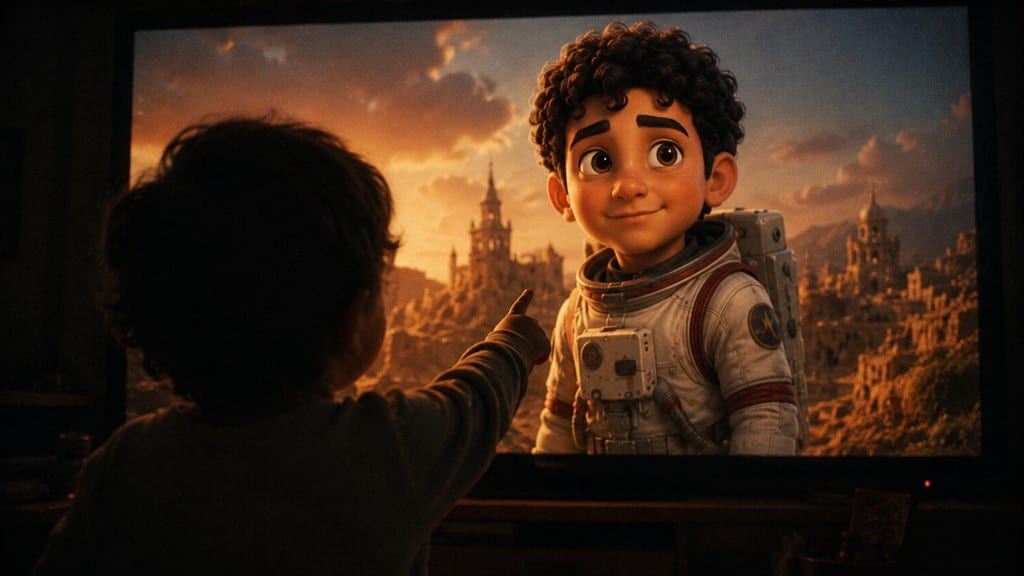
People often assume kids' animation is easier because the stories are simple, the colors are bright, and the audience is young. Anyone who has actually made work for children knows the opposite is true. Children are the most direct audience in the world. They feel when something is wrong before they can explain it.
AI makes this more visible. A slight change in eye size can make a beloved character feel unfamiliar. A smile held too long can become strange. A voice line that sounds technically expressive can still miss the emotional truth of the scene.
Warmth is a technical requirement
For The Adventures of Sami, consistency is not only a brand issue. It is an emotional safety issue. Sami has to feel like the same child across wonder, fear, curiosity, embarrassment, and joy. If the model changes his face too much, the audience does not read it as variety. They read it as wrong.
Arabic humor adds another layer. Kids' comedy cannot rely on adult irony or translated punchlines. It needs rhythm, repetition, surprise, and words that sound natural in the mouth of a child. The writing has to respect the audience without becoming educational furniture.
Responsibility comes with scale
Educational content carries responsibility. AI can produce more episodes, more languages, more variants, and more personalized learning assets. That scale is powerful, but it also means the studio has to be stricter about accuracy, warmth, and developmental appropriateness.
The promise of AI in kids' animation is not cheap volume. It is the ability to build richer worlds faster while keeping human judgment close to the child watching the screen.