
2024-09-30
From Mascot to Franchise: How to Build a Character Asset That Compounds
A mascot sells a campaign. A character can become a system for episodes, merchandise, education, licensing, and long-term brand memory.
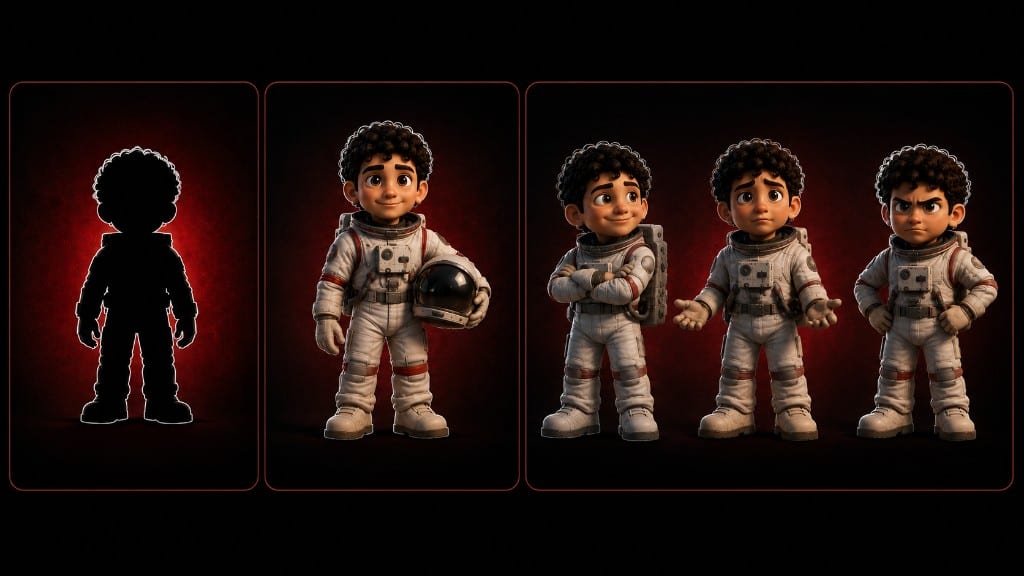
Many brands create a mascot for a campaign and retire it as soon as the media buy ends. The character appears on a launch film, a sticker pack, a few posts, and then disappears into the archive. That is not a character strategy. It is decoration with a name.
A franchise character is built to compound. Every appearance adds memory instead of resetting it. Every episode, product, social cut, and interactive moment makes the asset more valuable because the audience knows how the character behaves.
The five compounding parts
A character that compounds needs silhouette recognizability, defined emotional range, a story engine, a motion grammar, and licensing-ready design specs. If one of those is missing, scale becomes expensive fast.
The Adventures of Sami is a useful case because the character decisions were never just visual. Proportions were designed for warmth and readability. Color was chosen for recognition across dark space scenes and bright educational environments. The emotional system was built so Sami could be curious, afraid, proud, confused, and funny without becoming a different child every episode.
Sticker or universe?
The diagnostic is blunt: can your mascot carry a story without the product standing next to it? Can a child draw its silhouette from memory? Can the character move in a way that feels specific? Can another team produce assets without breaking the design? Can it survive outside one campaign message?
If the answer is no, you may have a sticker. That can be useful. But it is not a universe yet.